MONUMENTO NAZIONALE AL MARINAIO D'ITALIA

The story

The Monument in eight stops
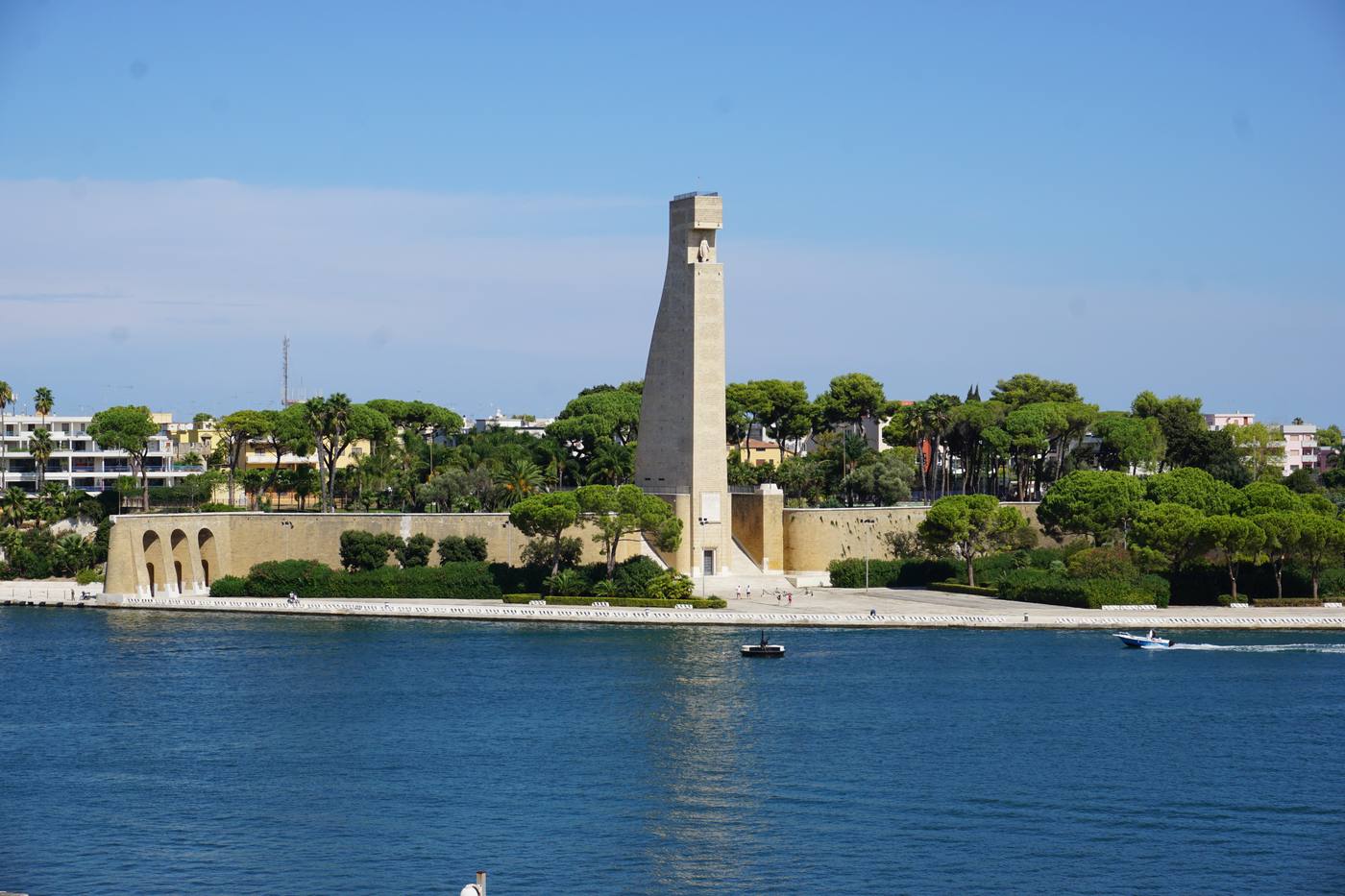
The Monument today, from the square.
01

Welcome

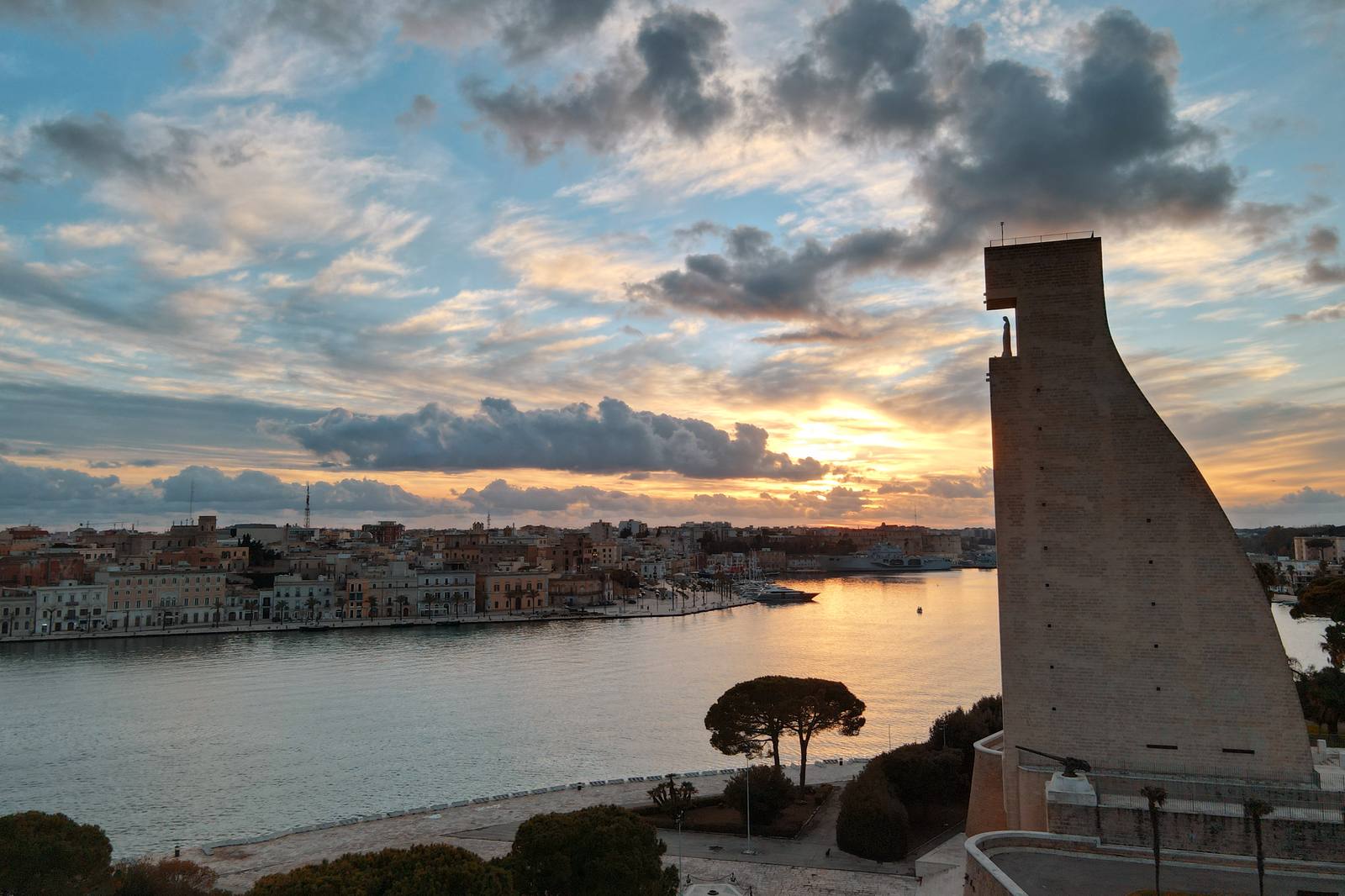
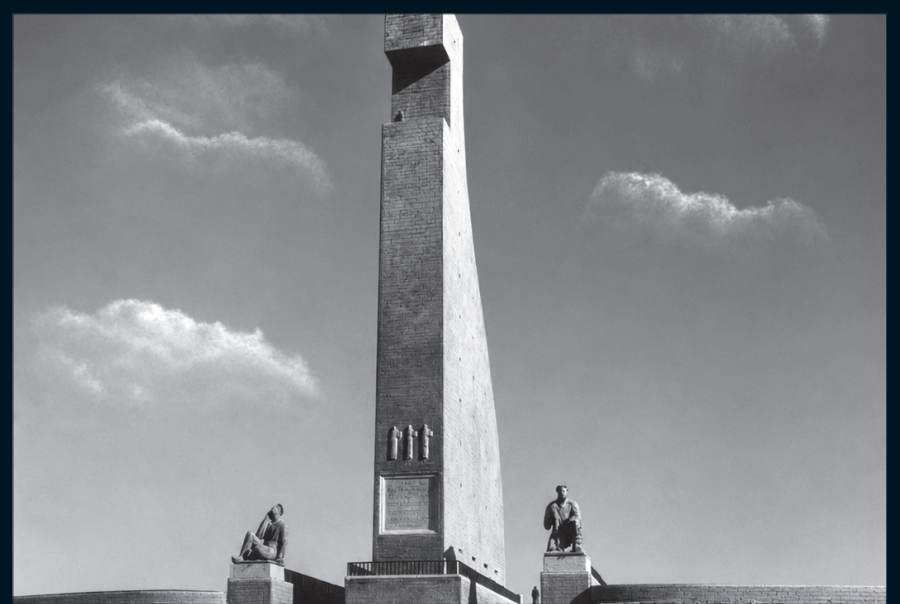
Welcome to the National Monument to the Italian Sailor, on the western shore of the harbour of Brindisi. The great structure rising before you has the shape of a ship's rudder: the symbol of steering, of the course to be held, of the destiny of all who sail the sea. It stands 54 metres tall from the upper terrace, and 68 metres when measured from the square below. Seen from above, the whole complex takes on the outline of a stylised bird, its wings spread over the harbour. This is not merely a monument: it is the national shrine of the Italian sailors who lost their lives at sea. Its story weaves together the memory of thousands of lives, the events of the twentieth century, and the ancient bond between Brindisi and the sea.
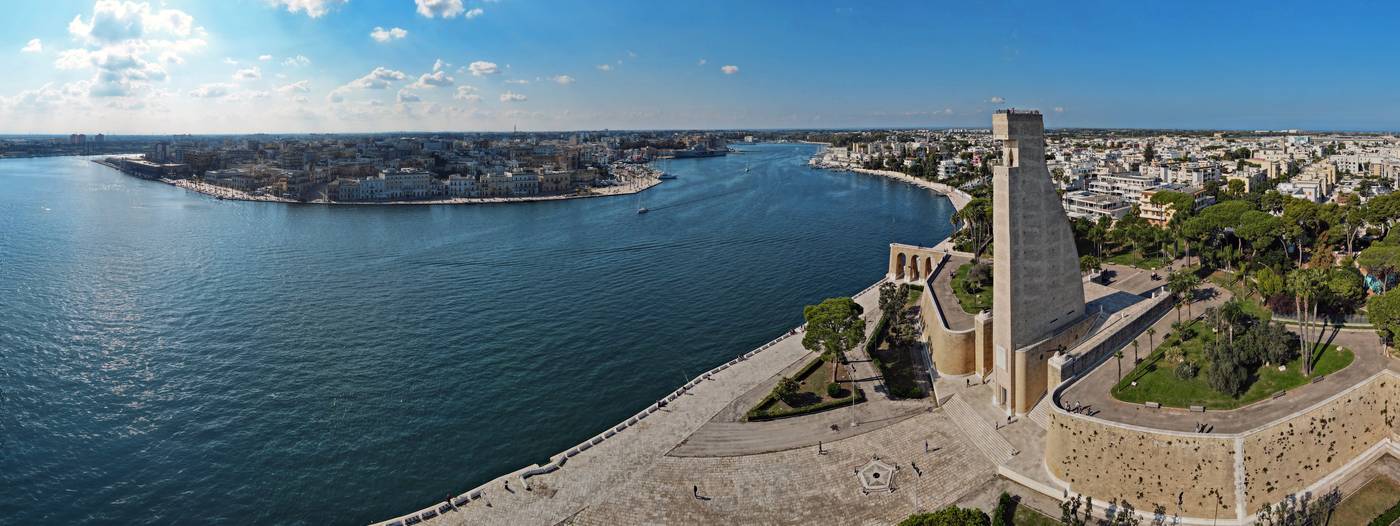
The Monument and the harbour of Brindisi from above.
02

Why Brindisi

During the First World War, the port of Brindisi was a decisive base for the control of the Adriatic. Admiral Paolo Thaon di Revel, commander-in-chief of the naval forces, declared that without Brindisi the war at sea could not have been fought; and it was from Brindisi, on 12 November 1918, that the bulletin of the naval victory was issued. The city was decorated with the War Cross. When, in 1923, the government announced its intention to erect a national monument to the fallen sailors in a seaport city, Brindisi immediately put forward its candidacy. Other cities aspired to the same honour: La Spezia, Trieste, Venice. But on 20 June 1925 the choice fell on Brindisi, in recognition of the merits it had earned during the war.

The project model in front view: the entrance surmounted by the cross, the two side sculptures and the pool of water (Luigi Brunati and Amerigo Bartoli, 1932).
03

A city and its monument

Years of fundraising followed: public subscriptions, commemorative stamps, charity balls, and the concerts of the celebrated tenor Tito Schipa, born in the Salento, who sang "for the Monument" in Italy's leading theatres. A first design, presented in 1927, was set aside because of its excessive cost. It was the Italian Naval League that undertook to complete the funding and, in January 1932, to launch a national competition: the work was to be sober, solemn and austere, with a crypt destined to guard the names of the fallen. Among the 92 designs submitted, the winner was "Sta come torre" - "It stands like a tower" - by the architect Luigi Brunati and the sculptor Amerigo Bartoli: a gigantic rudder enclosing a memorial chapel.

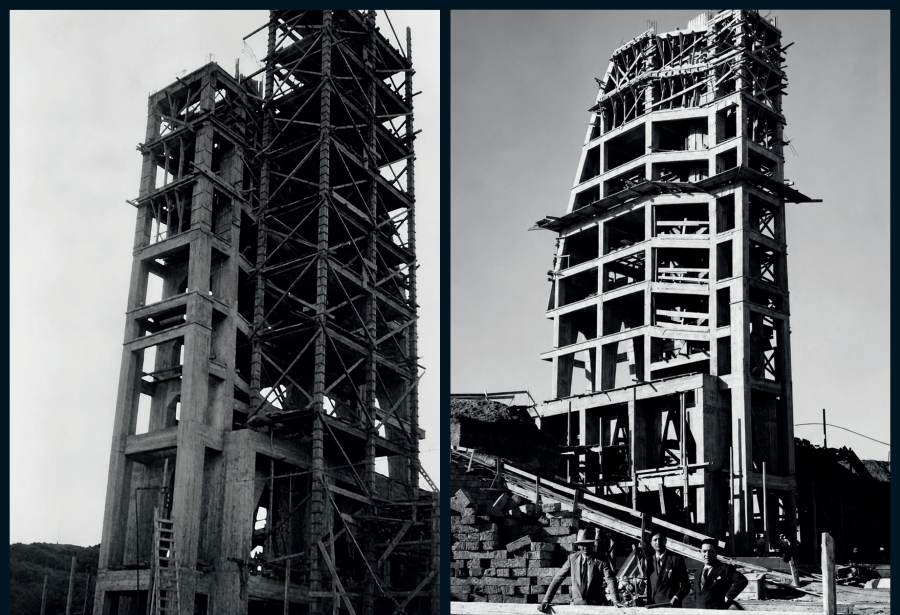
The rising structure wrapped in scaffolding.
04

The construction

Work began on 28 October 1932 and was completed, as promised, in a single year, by the Simoncini firm of Rome. The structure is of reinforced concrete, entirely faced with carparo, the golden calcarenite stone of this land; the steps are of white Trani stone. On the flanks of the rudder two large fasces in travertine were originally displayed; they were later removed. The final cost of the work was 2,300,000 lire. More than one scholar has noted the resemblance between this monument and the naval memorial of Laboe, in Germany, likewise dedicated to fallen sailors.

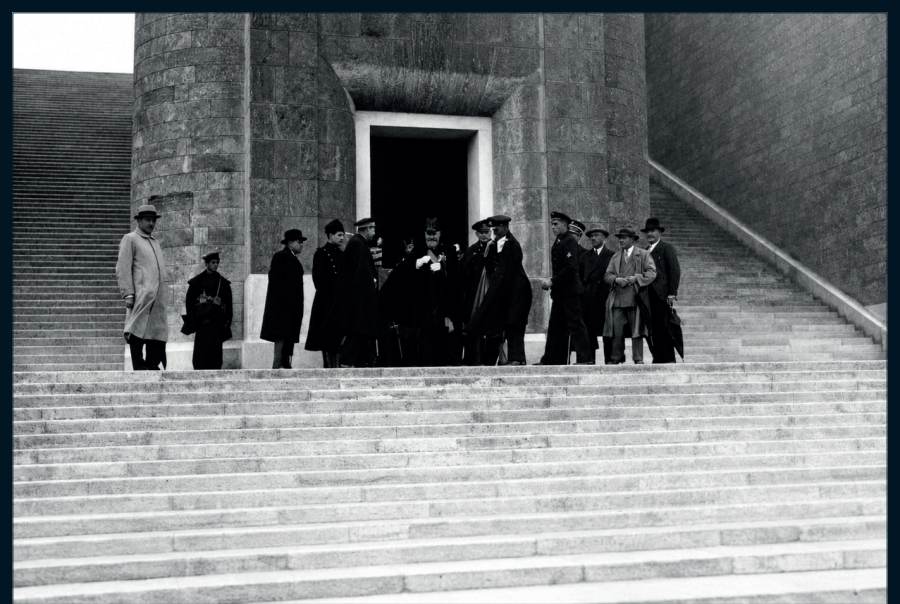
4 November 1933: the authorities on the steps on inauguration day.
05

The day of the inauguration

On 4 November 1933 Brindisi lived a memorable day. King Victor Emmanuel III, arriving by train in the morning, reached the monument by motorboat, while thousands of participants, brought from all over Italy by ten special trains, crossed the harbour on a floating bridge more than 250 metres long, built by the Navy. At half past ten, twenty-one gun salutes and a flight of seaplanes opened the ceremony, which was broadcast by radio throughout the country. In the afternoon, eight thousand servicemen and members of associations paraded before the sovereign. On that day the Naval League officially handed the monument over to the Navy; since 2014 it has belonged to the City of Brindisi.

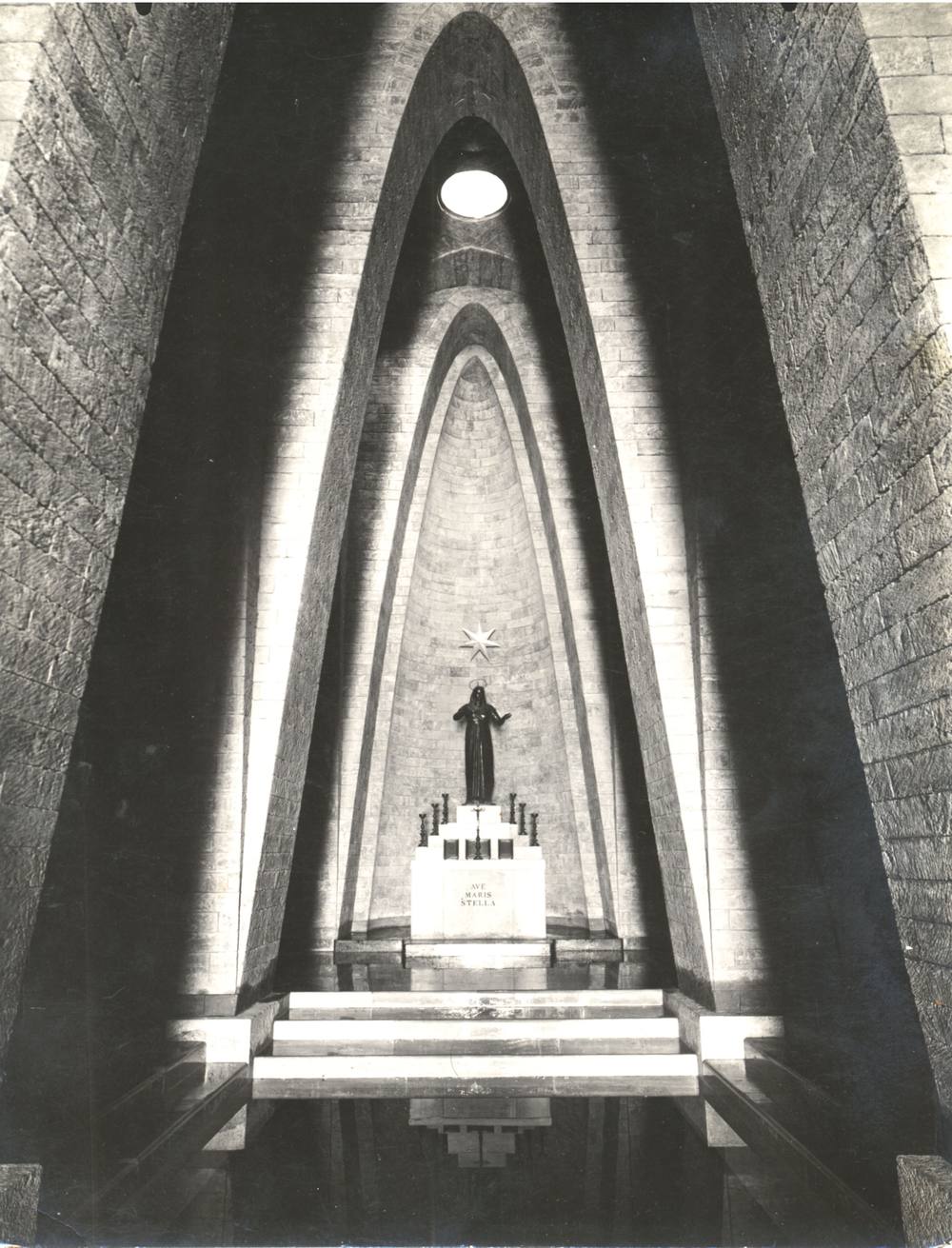
The crypt-shrine: the nave towards the altar and the Madonna Stella Maris.
06

The crypt and shrine

On the lower square opens the entrance to the votive crypt, 27 metres deep. Its profile evokes an upturned hull: as if the visitor were entering the belly of a ship, at the bottom of the sea. Along the nave, carved on great marble slabs, are the names of 5,922 sailors who fell in the First World War, together with the memory of the 33,900 fallen of the Second: their memorial slabs were unveiled on 18 July 1965, when the votive altar to the Fallen of the Sea was also inaugurated before the crypt, with the lighting of the perpetual flame. On the altar of Trani stone stands watch the bronze statue of the Madonna Stella Maris, Our Lady Star of the Sea, the work of the sculptor Amerigo Bartoli. Here is kept the stern bell of the battleship Benedetto Brin, the ship that exploded in this very harbour on 27 September 1915: the bell was recovered in 1968, during the dredging of the seabed. Beside it, an urn holding sand from El Alamein, and the tripod donated by the Association of the Mothers of the Fallen in War.

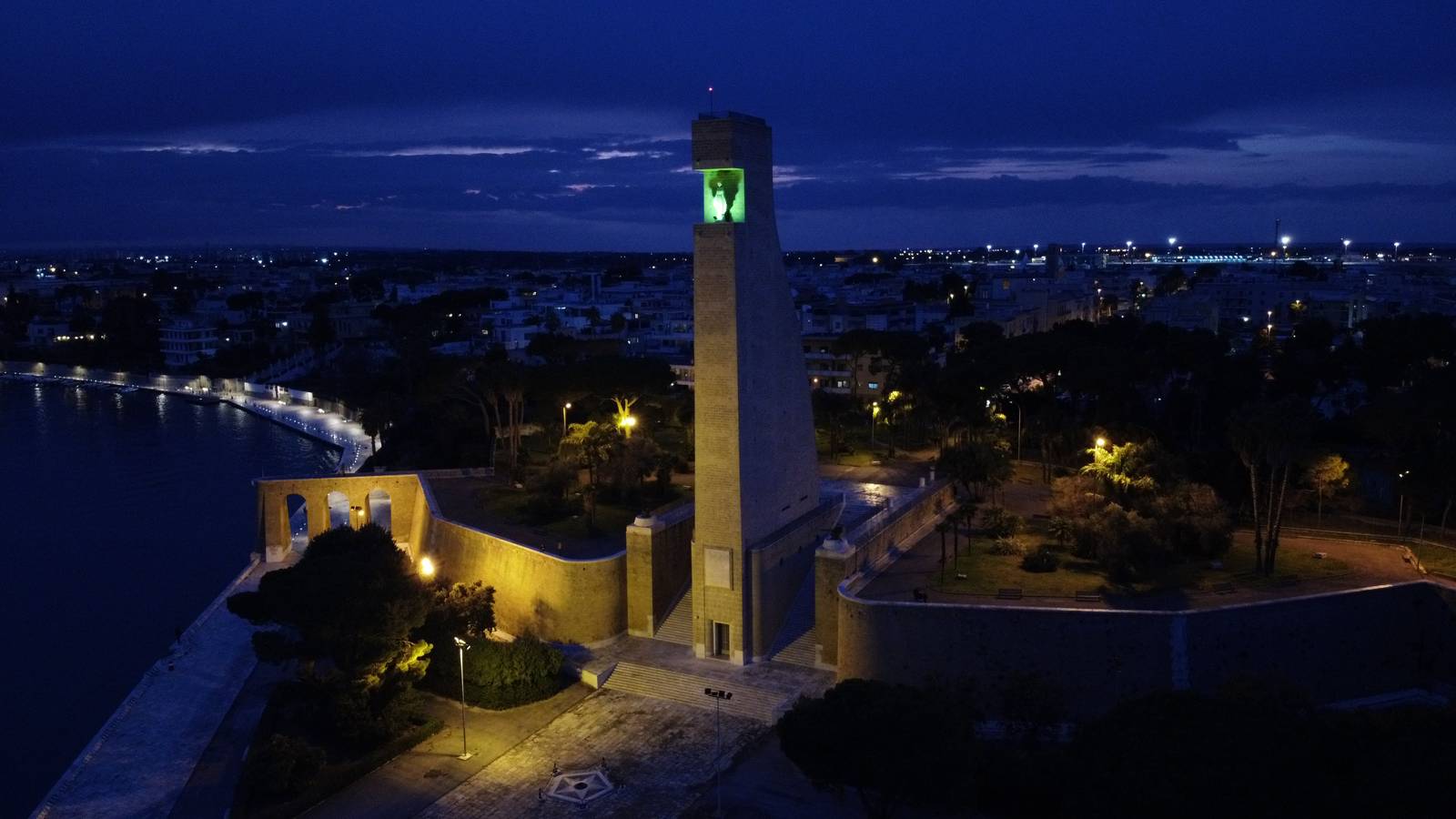
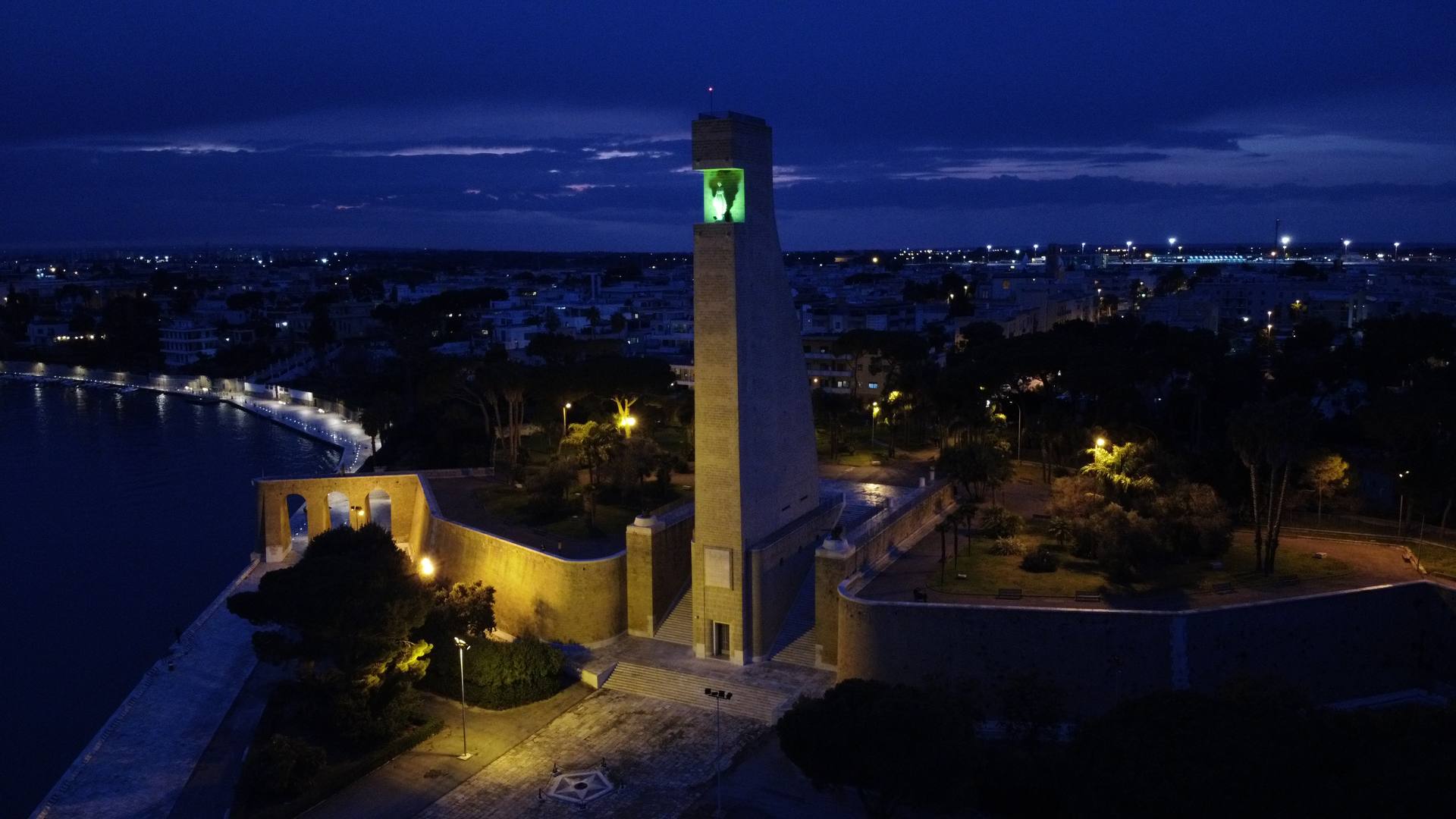
The lighthouse lantern alight: the Monument by night.
07

The upper terrace

Two flights of steps lead up to the upper terrace, where memory becomes trophy: here stand two great anchors from Austro-Hungarian ships and two Krupp guns that belonged to enemy submarines. They took the place of the two statues of sailors foreseen in the original design. High above, in the notch of the rudder, the statue of the Virgin has stood since 1955: four and a half metres tall and weighing ten tonnes, placed there in memory of the Marian Year. And since 1984 the monument has also been a working lighthouse, replacing the one on the island of Sant'Andrea: a light that still guides all who enter the harbour.

The stone rudder at sunset.
08

A message from the sea

Since 2002, by law of the Italian State, the Day of Remembrance of the Sailors Lost at Sea has been observed every year before this monument: first on 12 November, and today on 9 September, the anniversary of the sinking of the battleship Roma in 1943, with more than one thousand two hundred sailors lost. At the bottom of the sea, it has been written, there are no differences of rank, of nationality or of faith: there is only the brotherhood of seafaring people. This rudder of stone - shrine, lighthouse and lookout in one - guards that message and entrusts it to all who gaze at the horizon. Thank you for your visit, and enjoy your discovery of Brindisi.